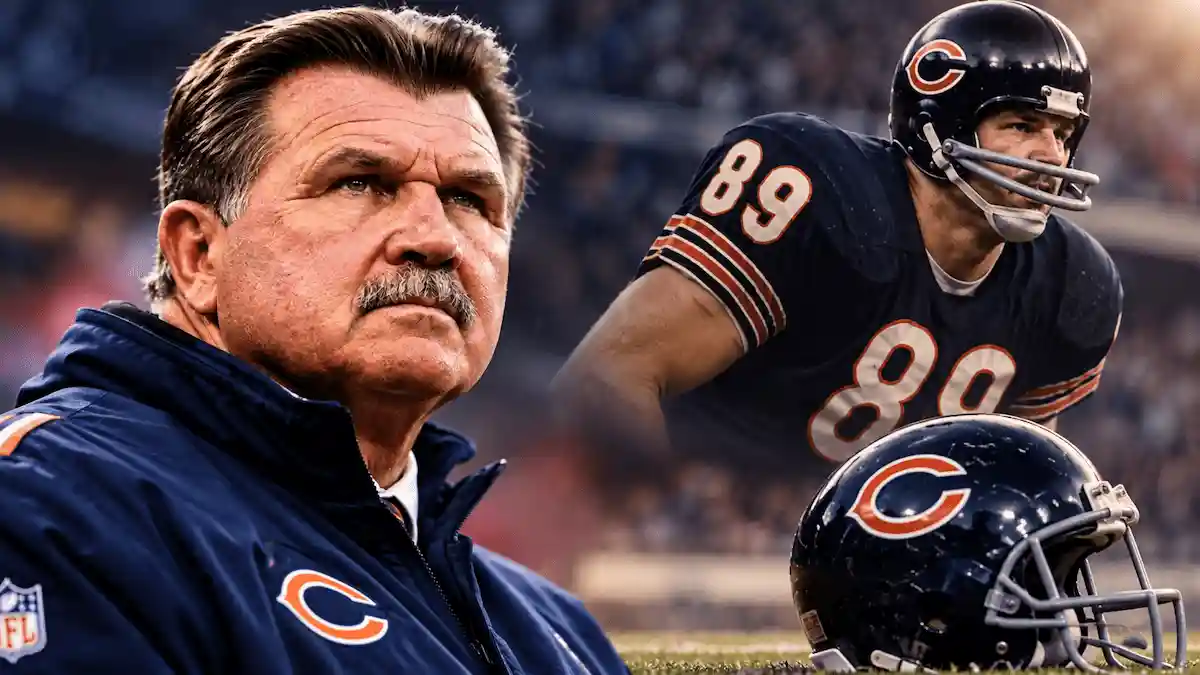
Mike Ditka, the legendary Chicago Bears player and Super Bowl-winning coach, has died at 86. His passing marks the loss of one of the most influential and recognizable personalities in NFL history.
The NFL has lost one of its most unforgettable figures. Mike Ditka, the Hall of Fame tight end who became the face of the Chicago Bears’ historic 1985 championship team, has died at the age of 86, his family announced on October 9, 2026.
For generations of football fans, Ditka represented much more than a successful coach. He embodied an old-school approach to the game built around toughness, discipline, accountability, and relentless competition.
His influence stretched across several eras of professional football. He first earned recognition as a player who helped transform the tight end position. Later, he became a championship-winning coach whose personality was almost as famous as his team’s performances.
Yet his greatest legacy may be the way he connected an entire city to a football team. In Chicago, Ditka was not simply the man who coached the Bears to a Super Bowl victory. He became a lasting symbol of the franchise’s identity.
His death closes a remarkable chapter in NFL history, but the memories he created will remain part of the sport for decades.
Mike Ditka Dies at 86: What We Know
The death of Ditka was announced by his family on Friday, October 9, 2026. The Pro Football Hall of Fame also confirmed his passing.
Born on October 18, 1939, Ditka spent more than six decades connected to football as a player, coach, broadcaster, and public personality.
His career included achievements that few people in the sport can match. He became a Hall of Fame tight end, won an NFL championship as a player with Chicago, earned a Super Bowl ring with the Dallas Cowboys, and later led the Bears to their first Super Bowl championship.
Ditka was inducted into the Pro Football Hall of Fame in 1988. He also received recognition in the College Football Hall of Fame for his outstanding career at the University of Pittsburgh.
His death brings renewed attention to a career that helped shape both the playing and coaching sides of the NFL.
From a Pennsylvania Steel Town to NFL Greatness
Mike Ditka was born in Carnegie, Pennsylvania, and grew up in nearby Aliquippa. His background helped shape the tough public image that followed him throughout his football career.
He attended the University of Pittsburgh, where he established himself as an outstanding college football player. His physical presence, receiving ability, and willingness to compete made him an attractive prospect for professional teams.
The Chicago Bears selected Ditka with the fifth overall pick in the 1961 NFL Draft.
It did not take long for him to make an impression.
In his rookie season, Ditka recorded 56 receptions for 1,076 receiving yards and 12 touchdowns. Those numbers were extraordinary for a tight end in that era, particularly when the position was often associated more with blocking than receiving.
His performances earned him NFL Rookie of the Year honors in 1961.
Ditka quickly became one of the league’s most productive players at his position. He combined the strength required to block defenders with the receiving skills needed to stretch the field and create scoring opportunities.
That combination helped establish a blueprint for future generations of tight ends.
How Ditka Helped Change the Tight End Position
Today’s NFL features tight ends who line up across the formation, catch passes downfield, block defensive ends, and create mismatches against linebackers and defensive backs.
The position has evolved significantly, but Ditka was among the players who demonstrated its potential decades ago.
He was not simply a blocker asked to help the offensive line. He was a genuine receiving threat who could punish defenses when given space.
In 1964, Ditka recorded 75 receptions, setting a single-season tight end record that stood until 1980.
He finished his playing career with 427 receptions, 5,812 receiving yards, and 43 touchdown catches. He also earned five Pro Bowl selections and multiple All-Pro honors.
After leaving Chicago, Ditka played for the Philadelphia Eagles and Dallas Cowboys.
His time in Dallas brought another major achievement. He was part of the Cowboys team that defeated the Miami Dolphins in Super Bowl VI following the 1971 season.
That championship added another important chapter to his playing career.
In 1988, the Pro Football Hall of Fame recognized Ditka’s accomplishments by inducting him into its prestigious ranks.
His playing legacy alone would have made him an important figure in NFL history. However, his most famous chapter was still ahead.
The 1985 Chicago Bears: The Team That Defined His Legacy
When people discuss Mike Ditka, one season almost always enters the conversation: 1985.
Ditka became head coach of the Chicago Bears in 1982. Over the following years, the team developed into a dominant force built around a powerful defense and a physically demanding style of play.
The Bears reached their peak during the 1985 season.
Chicago finished the regular season with a 15–1 record, demonstrating remarkable consistency on both sides of the ball. Its defense became one of the most feared units in league history.
Linebacker Mike Singletary, defensive lineman Richard Dent, and the rest of the defensive group created problems for opposing offenses throughout the season.
Offensively, quarterback Jim McMahon brought energy to the passing game, while running back Walter Payton remained one of the team’s most important stars.
The Bears entered the playoffs with enormous expectations and delivered when it mattered most.
They defeated the New York Giants and Los Angeles Rams to reach Super Bowl XX, where they faced the New England Patriots.
Chicago won 46–10.
The victory established Ditka as a Super Bowl-winning head coach and gave the Bears a championship that remains central to the franchise’s identity.
The team’s dominance, combined with its colorful personalities, made the 1985 Bears one of the most memorable groups in professional sports.
For Chicago supporters, Ditka became inseparable from that achievement.
The Coach Who Never Hid His Emotions
Ditka’s coaching personality was impossible to ignore.
He was outspoken, demanding, and visibly emotional. His sideline reactions became part of his public image, while his blunt comments frequently attracted attention beyond the football field.
Supporters admired his intensity and believed he demanded the commitment necessary to win championships. Critics sometimes questioned his confrontational approach.
Regardless of the debate, Ditka made his expectations clear.
He wanted players to compete, accept responsibility, and perform under pressure. His leadership style reflected the physical identity of his most successful Bears teams.
Modern coaching has evolved, with greater emphasis on analytics, specialized training, and detailed tactical planning. Yet Ditka’s career remains a reminder that leadership also involves establishing a clear identity and building belief within a team.
His championship demonstrated that his approach could work at the highest level.
He was named NFL Coach of the Year in both 1985 and 1988, further recognizing his influence during his time in Chicago.
Beyond the Bears: His NFL Career Had Difficult Chapters Too
Although the 1985 championship remains the defining moment of Ditka’s coaching career, his story was not without setbacks.
He coached the Bears through the 1992 season before moving on from the organization.
In 1997, he became head coach of the New Orleans Saints. The appointment generated considerable attention because of his reputation as a championship-winning coach.
However, the Saints struggled to achieve sustained success during his tenure. Ditka left the position after the 1999 season.
His coaching career showed both the power and the limitations of a strong leadership personality. A successful formula does not automatically translate to every roster, organization, or situation.
Still, his achievements with Chicago remained significant. His coaching record, championship success, and influence on the Bears ensured his place among the NFL’s most recognizable coaches.
His career should be remembered in full, including the victories that defined him and the challenges that tested him.
Mike Ditka Became a Cultural Icon
Ditka’s influence reached beyond football statistics and championship rings.
His distinctive appearance, direct manner of speaking, and association with Chicago made him recognizable even to people who did not regularly watch NFL games.
He became a familiar television personality and appeared in commercials and entertainment programming.
His image was also celebrated through the famous Saturday Night Live “Bill Swerski’s Super Fans” sketches, which humorously captured Chicago’s passionate sports culture and larger-than-life football personalities.
The sketches helped turn Ditka into a pop-culture figure as well as a sporting legend.
His connection with Chicago became especially meaningful because it extended beyond wins and losses. He represented the city’s traditional football identity: physical, proud, passionate, and unwilling to back down.
That connection is difficult to reproduce.
Many coaches win games, and some win championships. Far fewer become symbols of the cities and communities they represent.
Ditka achieved that rare status.
His Legacy Extended Beyond the Sidelines
After his coaching career, Ditka remained active in sports broadcasting and other public ventures.
He also supported efforts to assist former professional football players, including work associated with the Gridiron Greats Assistance Fund.
That work addressed the challenges faced by retired players who had spent years contributing to professional football but later needed financial, medical, or other assistance.
It offered another perspective on Ditka’s relationship with the sport. His involvement with football did not end when he stopped coaching.
The NFL has changed dramatically since his playing days. Rules, training methods, player safety standards, and offensive systems have all evolved.
Yet the people who helped shape earlier generations remain essential to understanding how the league became what it is today.
Ditka’s career connected several important periods in professional football, from his early days as a productive tight end to his championship success as a head coach.
What Mike Ditka’s Death Means for Chicago
The passing of a figure so closely associated with the Bears naturally brings back memories of the franchise’s most celebrated era.
For longtime supporters, Ditka represents the excitement of the 1985 championship and the personalities who made that team unforgettable.
For younger fans, his story offers a link to the history behind the Bears’ identity.
His achievements also provide a reminder of how difficult it is for any NFL team to build a championship legacy. Winning a Super Bowl requires exceptional players, strong coaching, preparation, and the ability to perform under pressure.
The 1985 Bears brought those elements together in extraordinary fashion.
Ditka’s place in the franchise’s history is secure because he was central to that accomplishment.
Tributes from the football community will continue to reflect on his achievements, personality, and influence. His family, former players, fellow coaches, and fans now have an opportunity to remember a man whose career left a lasting mark on the game.
Final Thoughts: The End of an NFL Era
Mike Ditka’s death at 86 marks the passing of one of the most recognizable figures in American football.
He was a pioneering tight end, a Super Bowl-winning head coach, a Hall of Famer, and a personality whose influence reached far beyond the playing field.
His journey from Pennsylvania to the NFL’s biggest stages demonstrated an extraordinary commitment to competition. His playing career helped expand expectations for the tight end position, while his coaching career produced one of the most celebrated teams in league history.
But his greatest legacy may be the memories he created for millions of football fans.
The 1985 Chicago Bears remain a defining part of NFL history, and Ditka will always be associated with their remarkable championship run.
Football will continue to produce new stars, new champions, and new unforgettable moments. However, the figures who shaped its history are never truly forgotten.
Mike Ditka leaves behind a legacy built on toughness, achievement, and an unmistakable personality.
For Chicago and the wider NFL community, the loss is deeply significant. His era may have ended, but his place in football history will endure.